Tabby vs. Solid: Understanding Coat Patterns in Cats (And What is the Inhibitor Gene Anyway?)
We can’t talk about cat colors without discussing patterns and we definitely can’t skip talking about the inhibitor gene, because it’s responsible for creating the stunning smoke coats! So much to get into so let’s dive in.
You may hear the terms “agouti” and “non-agouti” being thrown around in cat circles. Agouti is the cat-nerd term for tabby. Non-agouti is the cat-nerd term for solid. There are various types of tabby cats- and don’t worry, I’ll explain those too, but for now just know that when it comes to cat patterns, the first distinction is whether the cat is tabby (agouti) or solid (non-agouti).
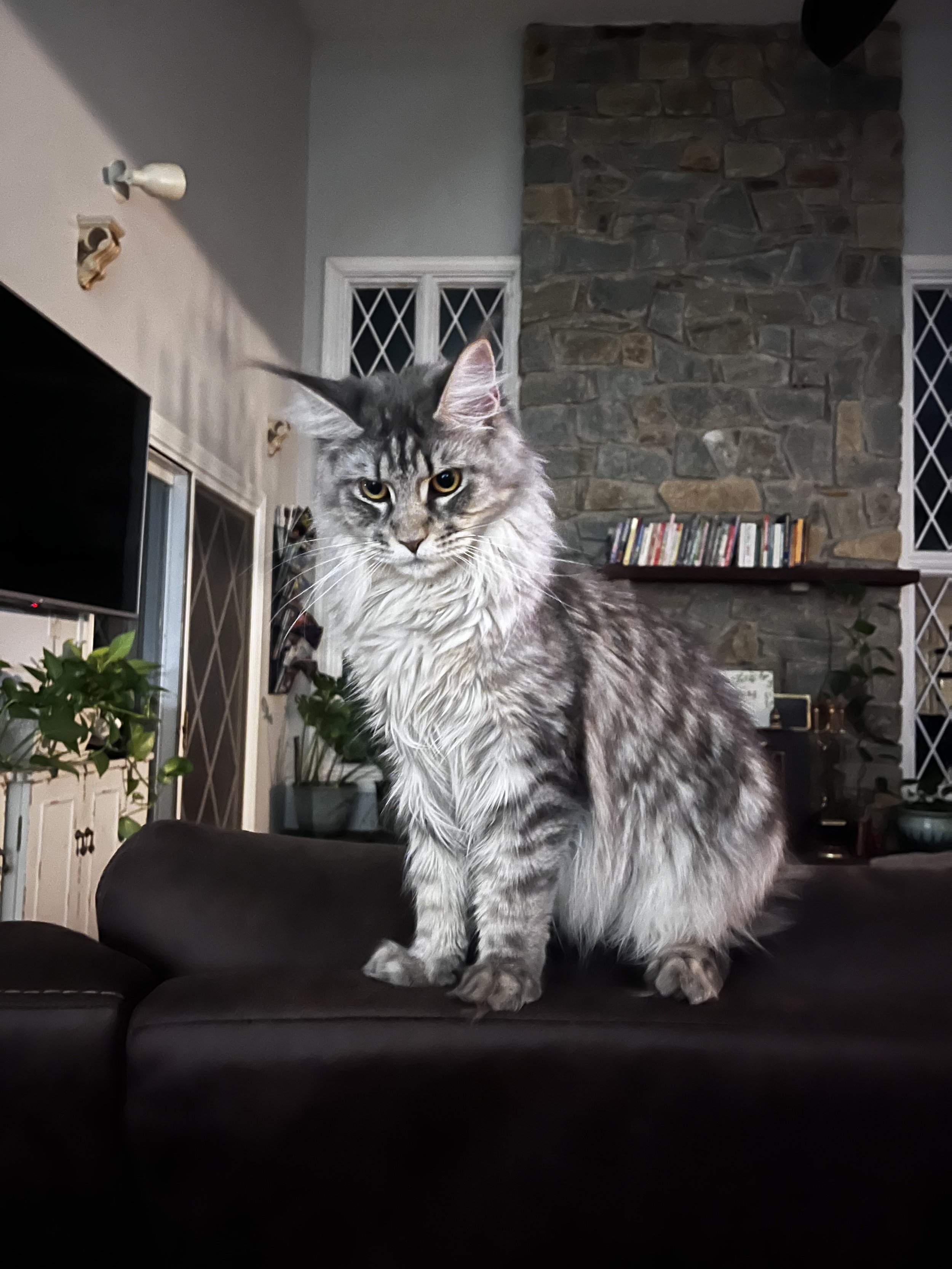
Chloe- A Stunning Blue Mackerel Tabby Maine Coon
In cats, tabby is the default pattern. The agouti gene (A) produces tabby patterning and is dominant. The non-agouti gene (a) suppresses that pattern producing a solid coat.
Let’s go back to biology class for a minute and discuss possible genetic outcomes. If a cat is tabby, it may carry one or two copies of the dominant (A) gene. If a cat is solid, it carries two copies of the recessive a/a gene.
• A/A or A/a = tabby
• a/a = solid
A cat only needs one copy of the agouti gene to display a tabby pattern. To appear solid, the cat must inherit two copies of the non-agouti gene.
With me so far?
Remember that tabby is the default pattern. The non-agouti (solid) gene suppresses the tabby pattern. So solid cats still carry tabby genetics, but they are just covered up.
This is why solid cats may:
• Show faint striping as kittens (ghost tabbing)
• Have lighter roots or shading
• Appear rusty or brownish in sunlight
As kittens mature, ghost markings often fade, though they may never fully disappear.
Here’s the really crazy thing- almost all red (orange) cats appear tabby because their red coloring isn’t dark enough to fully cover the tabby pattern. There are ways to determine whether a red cat is genetically tabby by looking at them (the coloring of their nose and the color of the areas around their eyes), but most red cats appear tabby- and even some of the most experienced cat-nerds have a hard time telling the difference.
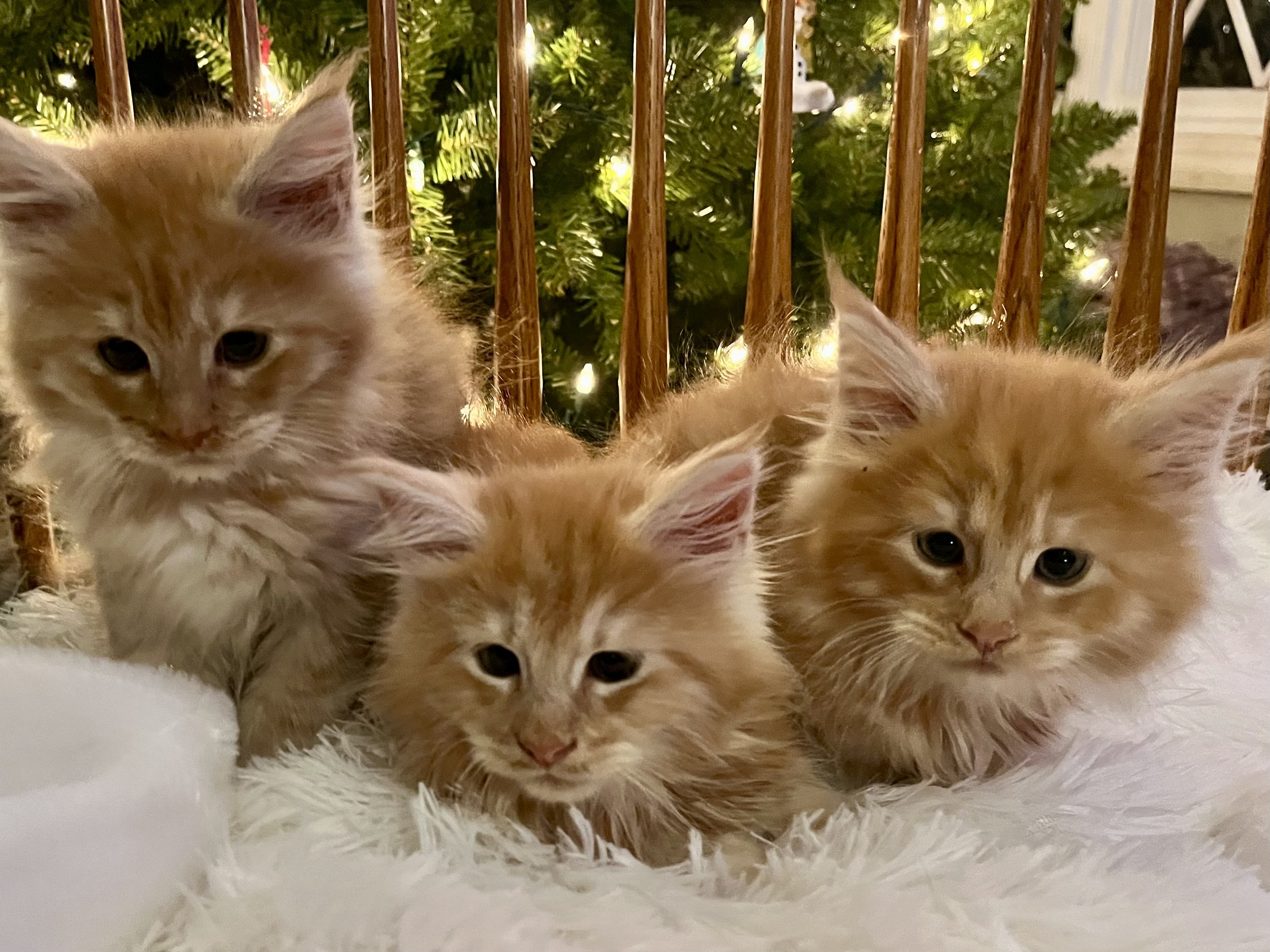
Genetically Solid Red Maine Coon Kittens
There’s still another gene we have to talk about if we are going to do this discussion justice- the inhibitor gene (I). The inhibitor gene affects how pigment is deposited along the hair shaft. Instead of color extending from root to tip, pigment is blocked near the base of the hair.
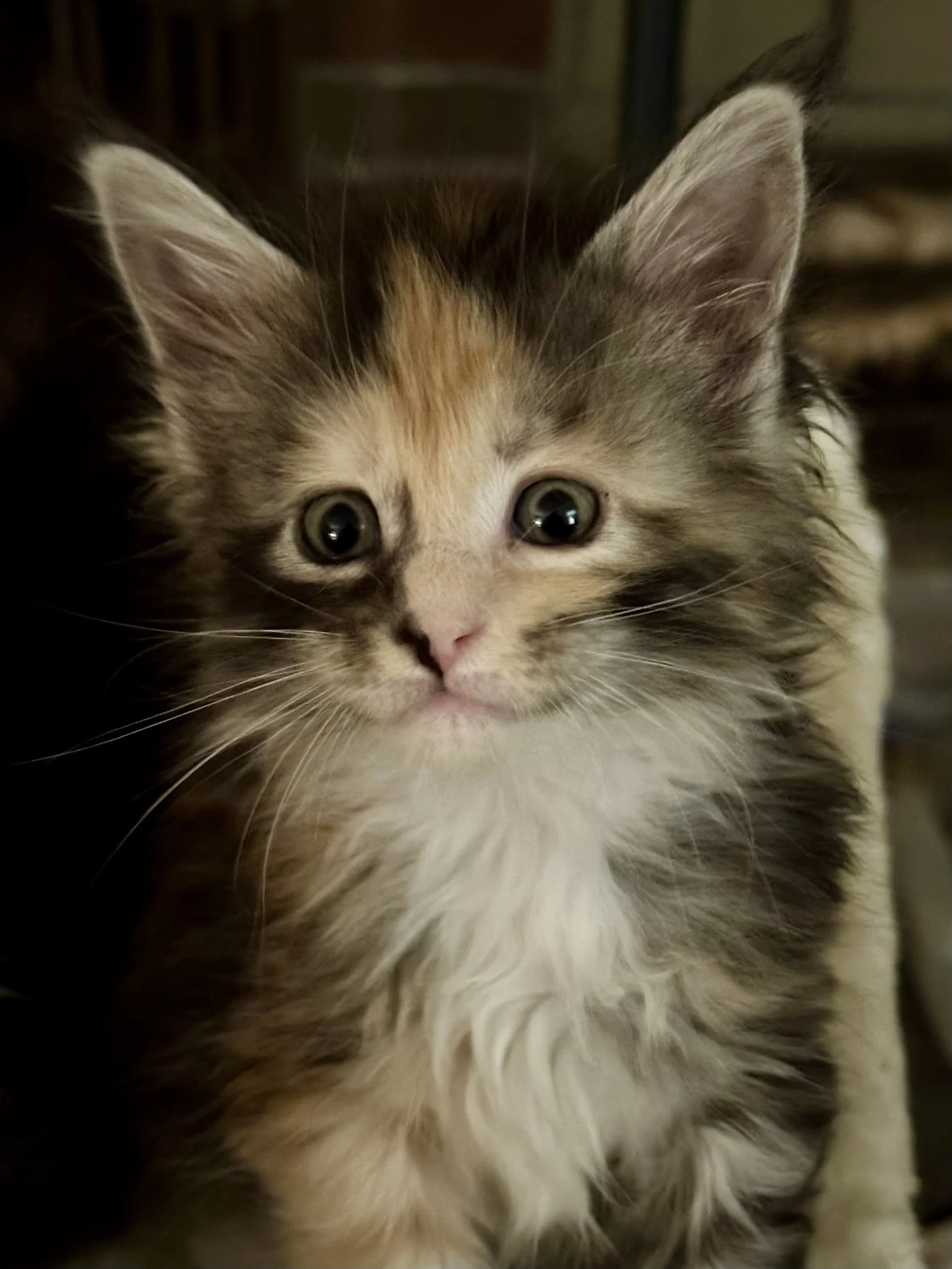
Fiona is a black smoke tortie (red, black and white)
If a kitten inherits the inhibitor gene and the kitten is solid, then the kitten will have a “smoke” coat. If a kitten inherits the inhibitor gene and the kitten is tabby, the kitten will be considered to be [insert base color (s)] and silver.
When a tabby cat carries the inhibitor gene:
• The background color becomes white or pale
• The tabby markings remain dark and defined
When a solid cat carries the inhibitor gene:
• The cat appears solid when it isn’t moving
• The roots flash white or silver when the coat moves
DNA tests show whether a cat has one or two copies of the Agouti or Non-Agouti gene, but they do not show how many copies of the inhibitor gene a cat may carry. It is possible to conduct a separate test to find out, but it’s pretty expensive, and I don’t see any reason to need that information.
I will find out when Ember and Moshi’s kittens are born if either Ember or Moshi don’t have two copies of the inhibitor gene though because both cats are black smoke. If any of the kittens are pure black, then either Ember or Moshi only carry one copy of the gene.
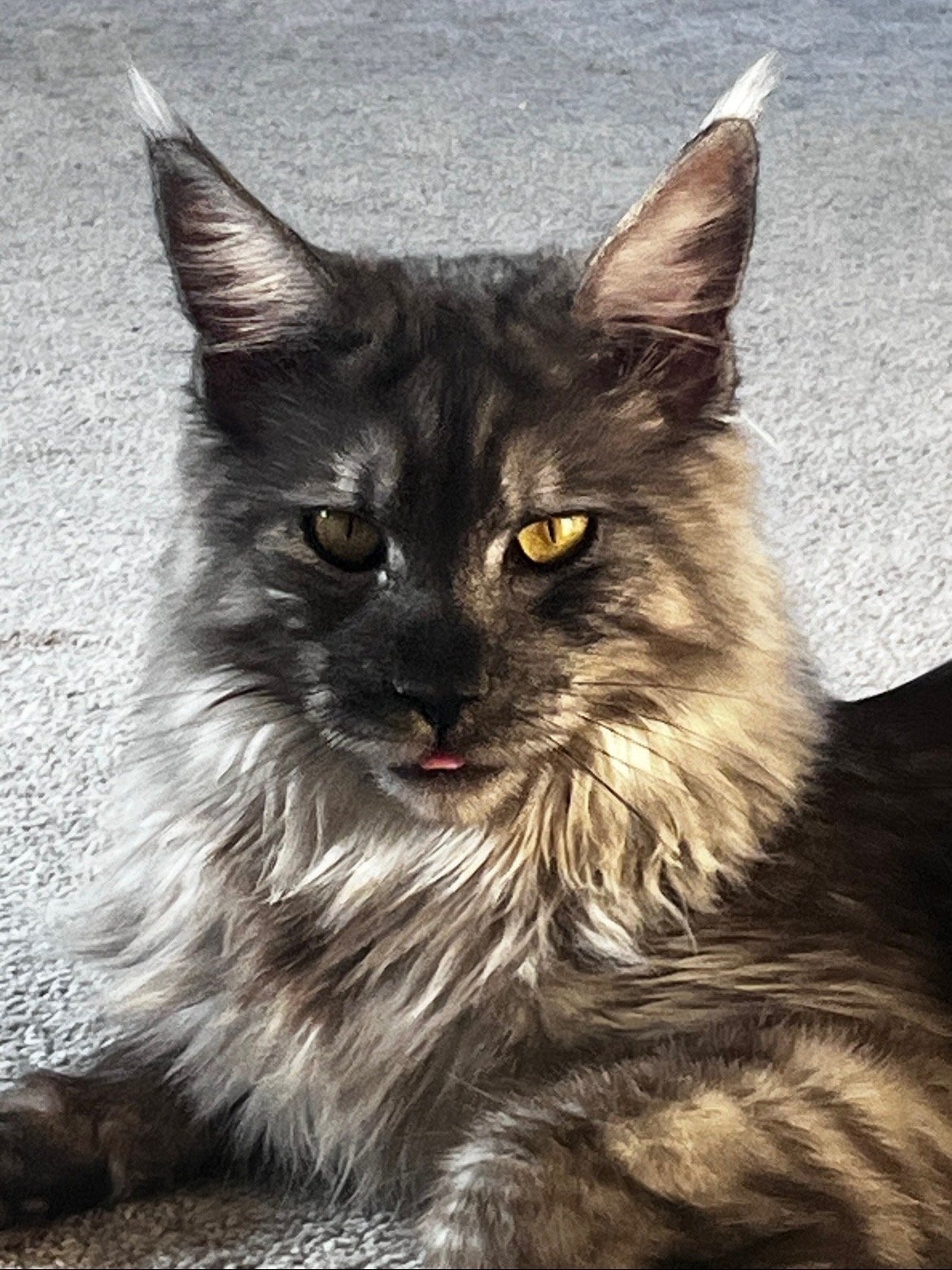
Ember- Black Smoke Maine Coon Queen
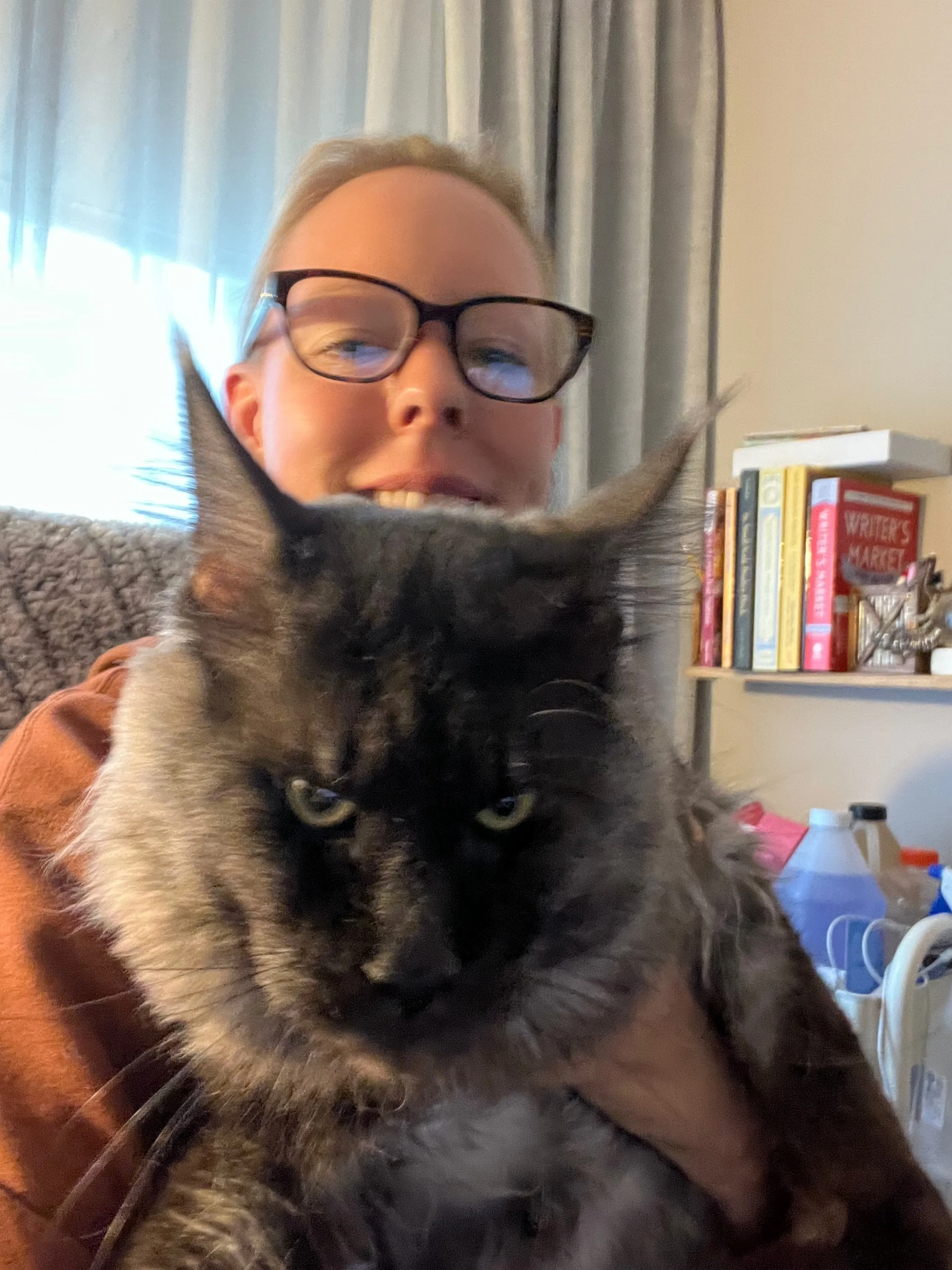
Moshi- Black Smoke Sire
Next week, we will look at the various tabby patterns and how you can tell the difference between them.
