How Kittens Get Their Color
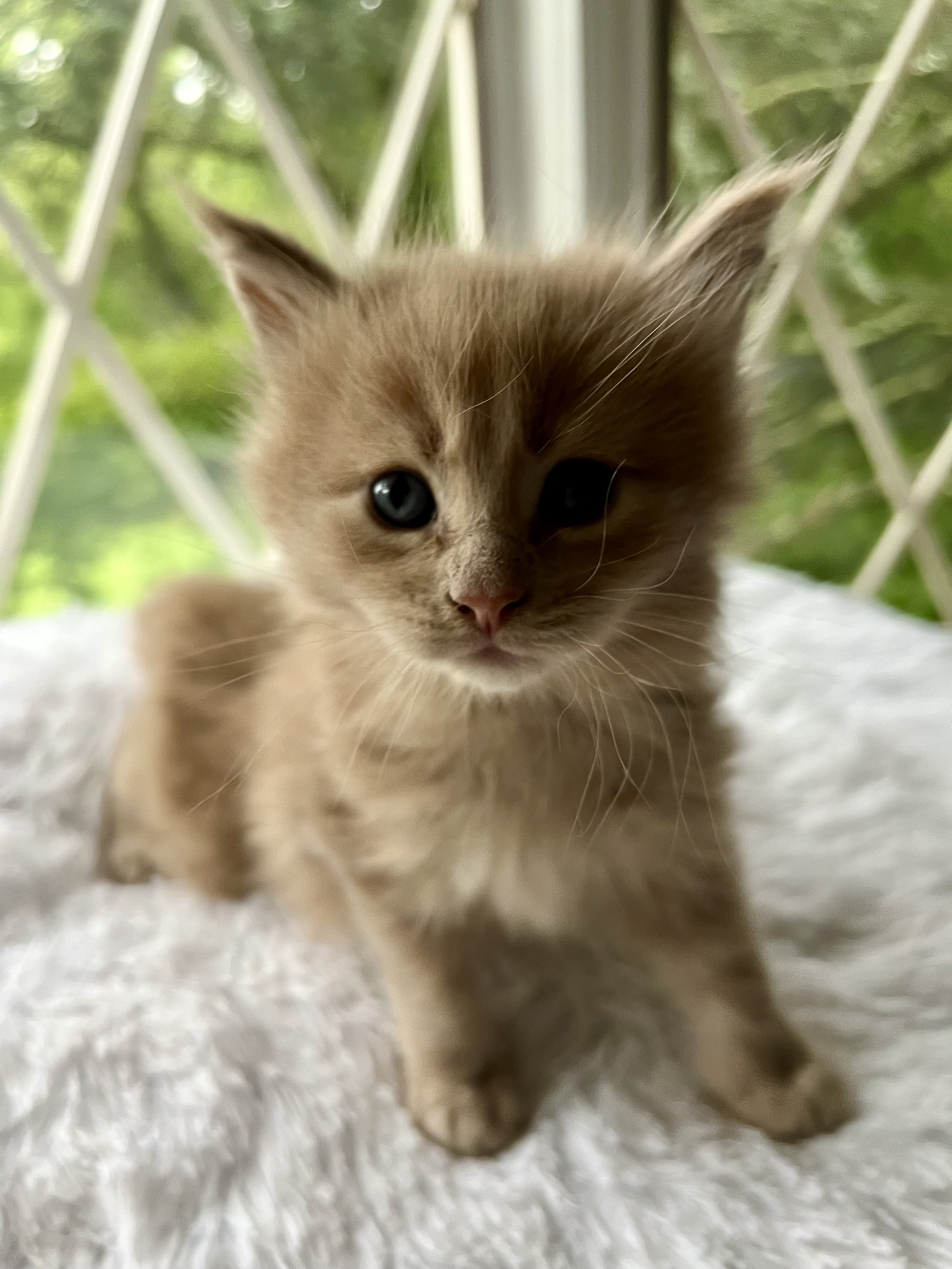
If you’ve ever wondered why your kitten turned out red, black, blue, cream—or why they are a mix of colors—this post is for you. We’re going back to biology class because understanding Maine Coon coat color means understanding the X chromosome.
First, there are only two true colors in cats- black and red (orange). (White is a whole other animal and we’ll get there, but for now, just know that it’s like “frosting” on a kitten and doesn’t act like a true color.)
Everything else you see—blue, cream, smoke, silver, tabby patterns—are genetic modifiers layered on top of those two color foundations.
The gene that determines the color of a kitten resides on the X chromosome. Remember (again, going back to biology class), females have two X chromosomes and males have one X chromosome and one Y chromosome.
Male Cats (XY)
Males only have one X chromosome, so they can inherit only one color gene: either red or black, but not both. Since male kittens get their Y chromosome from dad, their color must come from mom. If mom is black and red, the male kitten will either be black or red.
Female Cats (XX)
Females have two X chromosomes, which means they get one X from dad (and therefore always carry one color from dad) AND they get one X from mom. If mom is black and red, the female kitten will either get black or red from mom.
So, if there are only two colors then how did I get a blue kitten?
That’s a great question, and I’m so glad you asked! In addition to the color gene that’s on the X chromosome, cats also carry a gene that can dilute color. A cat may have two copies of the dilute gene, one copy, or no copies. So, if the dilute gene is represented by “d” (again, remembering back to biology class, the dilute gene is recessive so we will use a lower case “d” for to represent it), we could have a pairing like this:
Mom Dd
Dad Dd
Kitten dd
The dilute gene affects how pigment is distributed in the hair shaft so it will change black to blue and red to cream.
This explains why in the last litter that went home, Jenna (red and black) and Moshi (black smoke) had Pepper who was a blue male kitten.
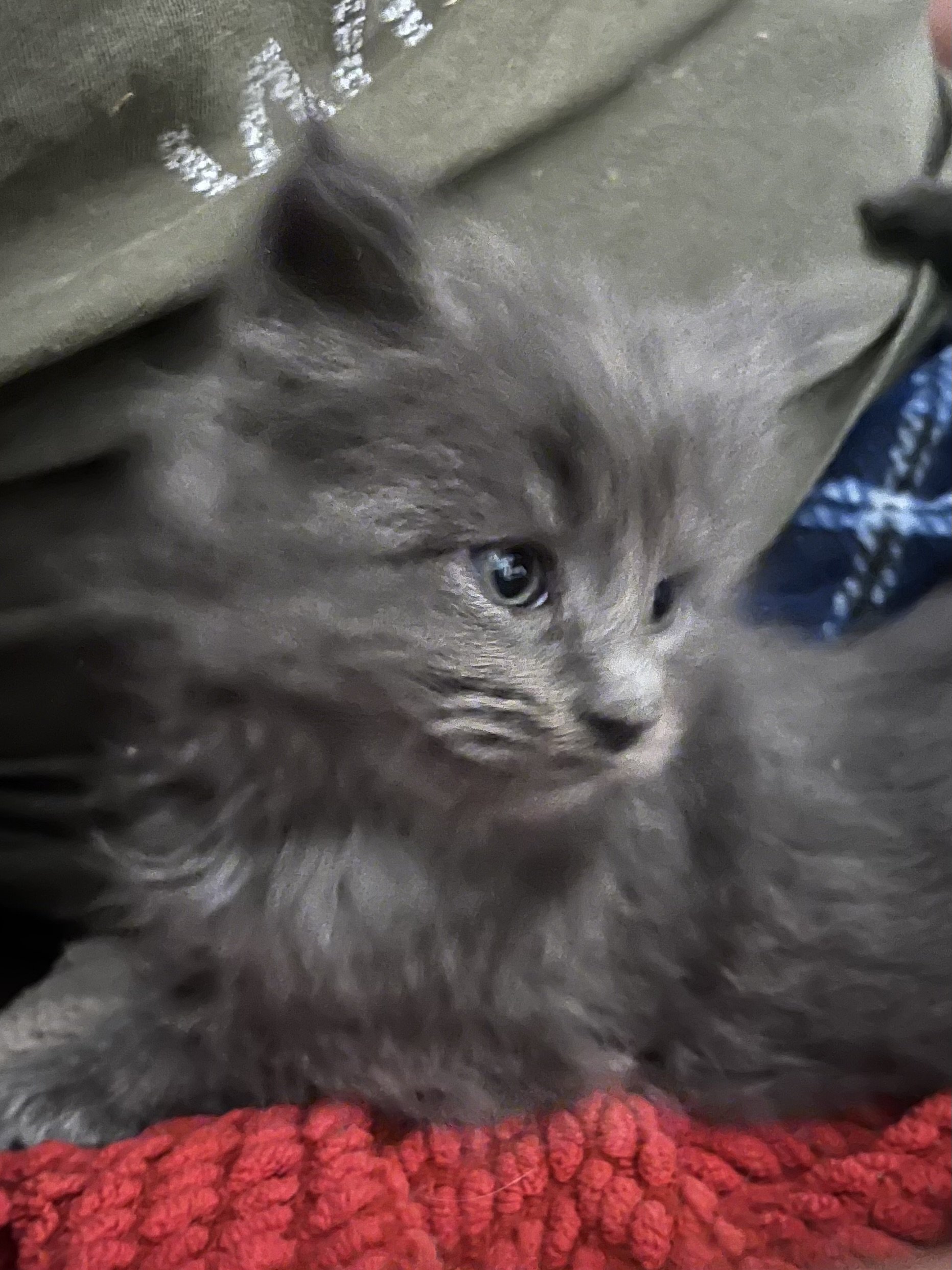
Pepper got his color from his mom (black) and the dilute gene from both mom and dad because they each carry one copy of dilute. He is genetically black, but his color is diluted to blue.
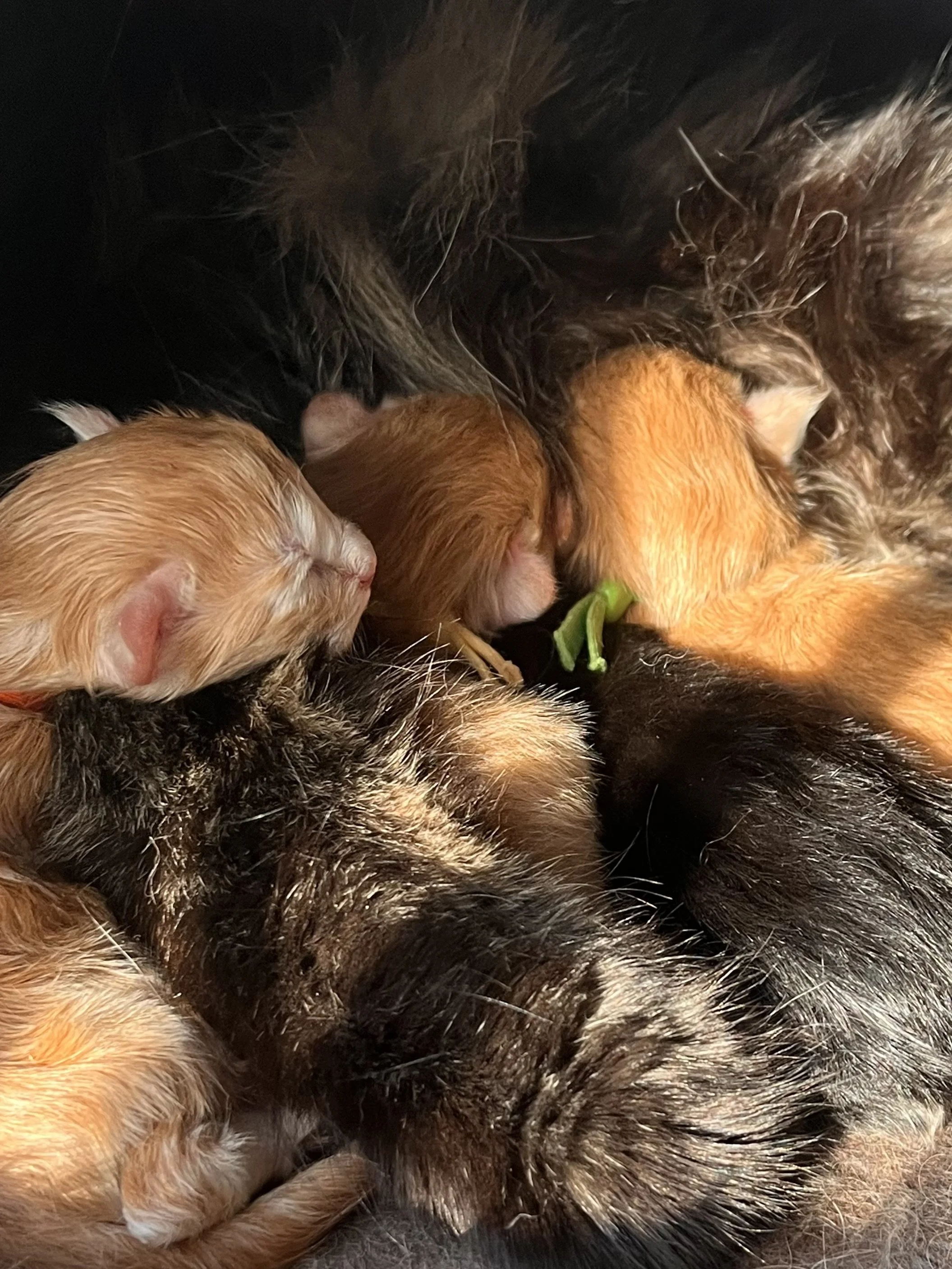
Using the same example of Jenna and Moshi, the other three male kittens in that litter were red. They all got their red color from Jenna (and I wouldn’t have it any other way because they’re all adorable), but they could also have turned out to have been jet black, black smoke (I’ll explain “smoke” in the next post), or cream.
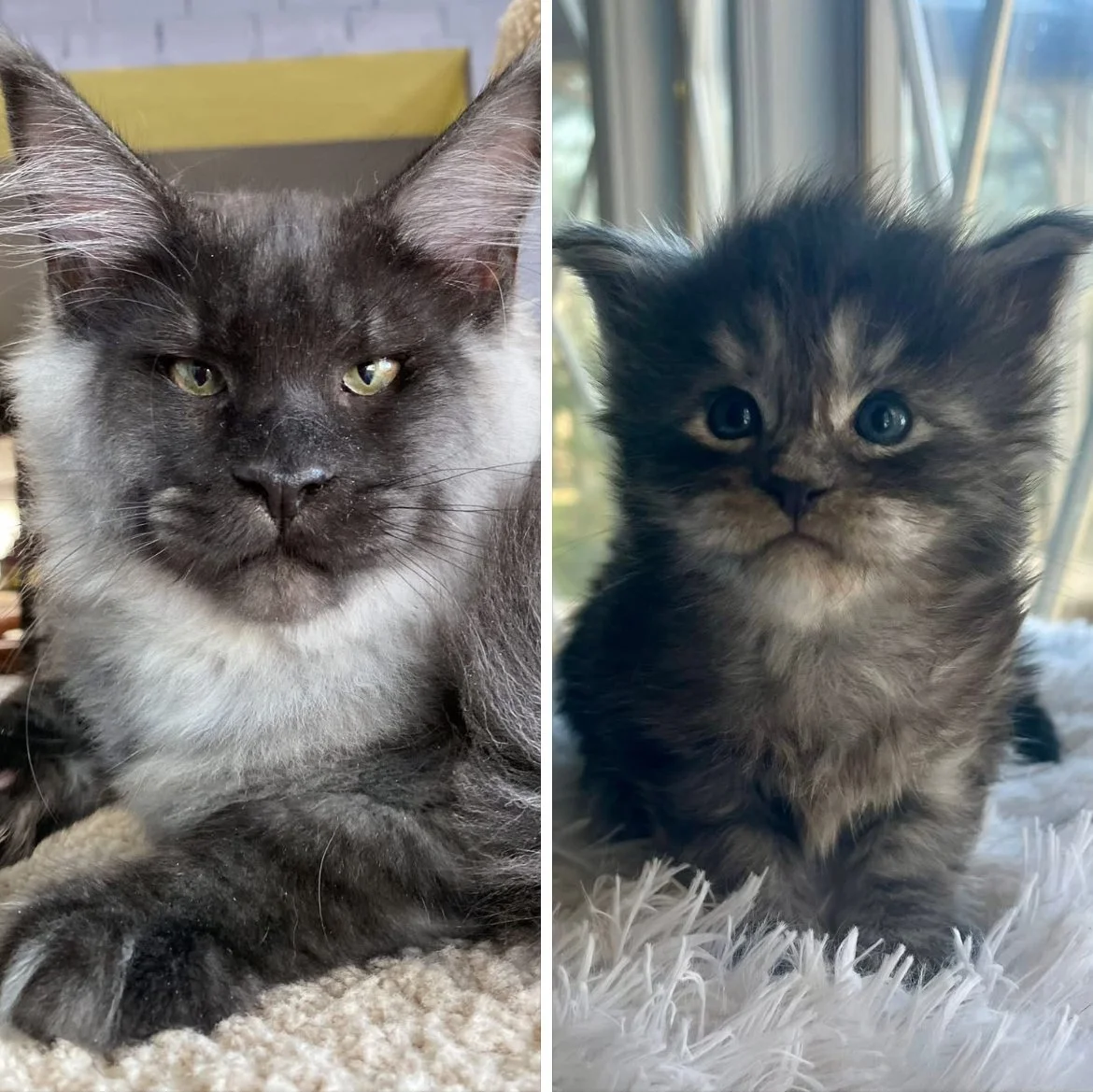
In that litter, Jenna had one female kitten. The female kitten had to have black in her coat because she got one X chromosome from Moshi who is a black smoke. Her other X Chromosome came from mom, and she got the one that had black on it. Little Sage ended up being black (and having a smoke coat like her daddy), but she could also have been jet black, blue, black and red or black and cream.
Putting It All Together
At birth, every kitten has:
1. A base color (or possibly 2 base colors if they’re female). The options for these colors are black or red (determined by the X chromosome)
2. Possibly a dilute modifier, turning that base color into blue or cream
In my next post, I’ll explain how kittens can get that stunning smoke coat and also why some of them show up striped when their parents are not (spoiler alert- the tabby pattern is a dominant gene!). All the biology nerds are now super invested. For everyone else, I promise the next post will have pictures of cute kittens too.
