Understanding Tabby Patterns: How to Identify Each One
The tabby pattern is one of the most common and most misunderstood coat patterns in cats. And while many people think “tabby” is a color, it’s actually a pattern.
Let’s break down the different tabby patterns, how to identify them, and what makes each one unique.
First: What Is a Tabby?
Remember when we talked about cats either being agouti or non-agouti? All cats with a pattern are considered agouti- and agouti is another word for tabby. Their patterned coats are caused by the agouti gene, which allows individual hairs to have bands of light and dark pigment. This creates the striped, swirled, or spotted appearance we recognize as “tabby.”
Tabby cats share a few common traits:
· The classic “M” marking on the forehead
· Lined eyes (almost like eyeliner)
· Pigmented nose leather outlined in a darker color
· Ringed tail
· Often striped legs
Today we’re going to dive deep into the four most common types of tabby (agouti) coat patterns.
1. Classic Tabby (sometimes called Blotched Tabby)
The classic tabby is known for its bold, dramatic swirls.
1. How to Identify:
· Large, circular or “bullseye” patterns on the sides
· Broad, thick markings
· A butterfly-shaped marking across the shoulders
· Swirling marble-like appearance
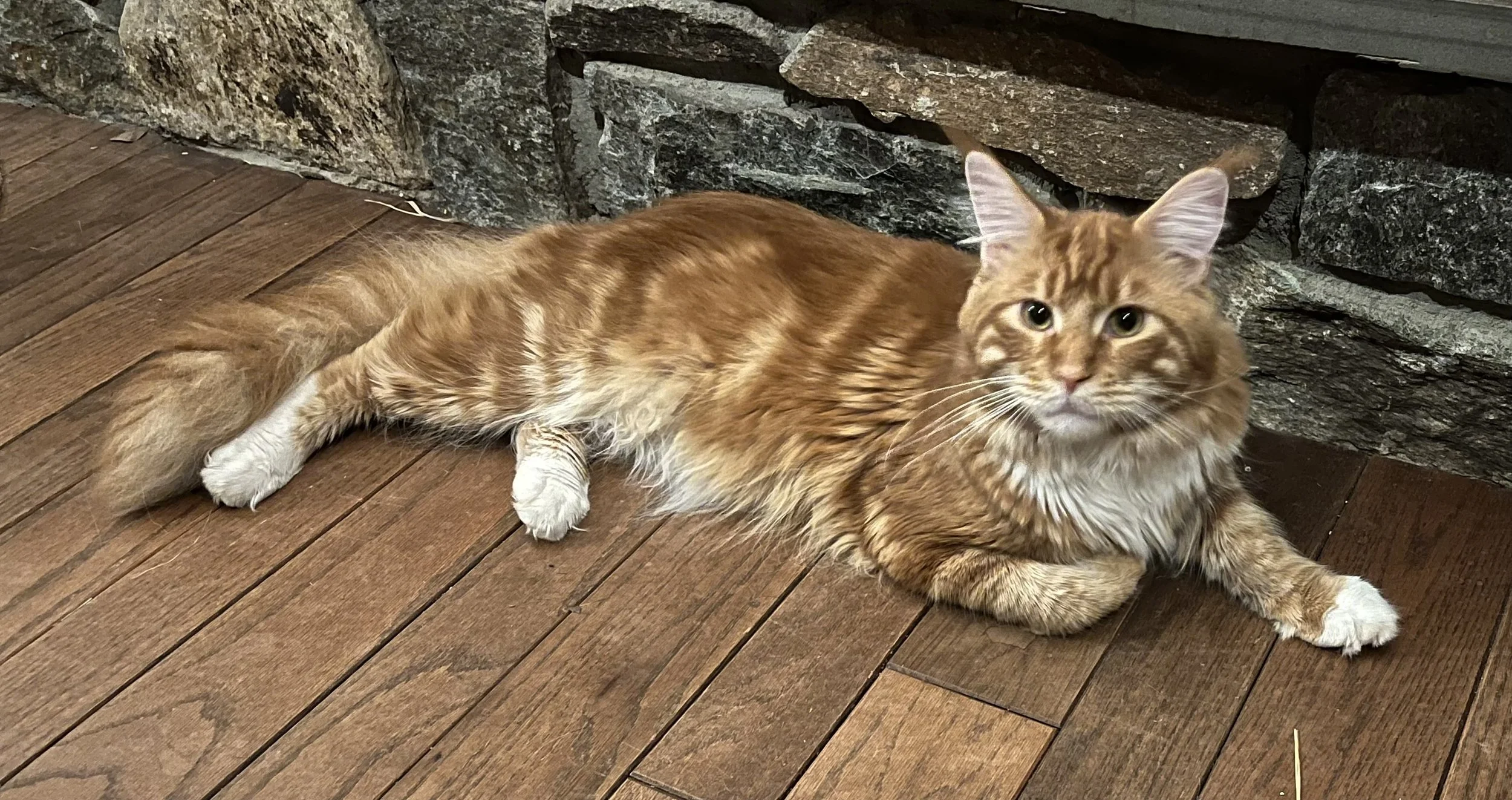
Katahdin is a Red Classic Tabby with White
2. Mackerel Tabby (sometimes called Striped Tabby)
The mackerel tabby is sometimes called the “tiger tabby.”
· Narrow, vertical stripes running down the sides
· Stripes branch off from a dark spine line
· Even, parallel striping
· Minimal swirling
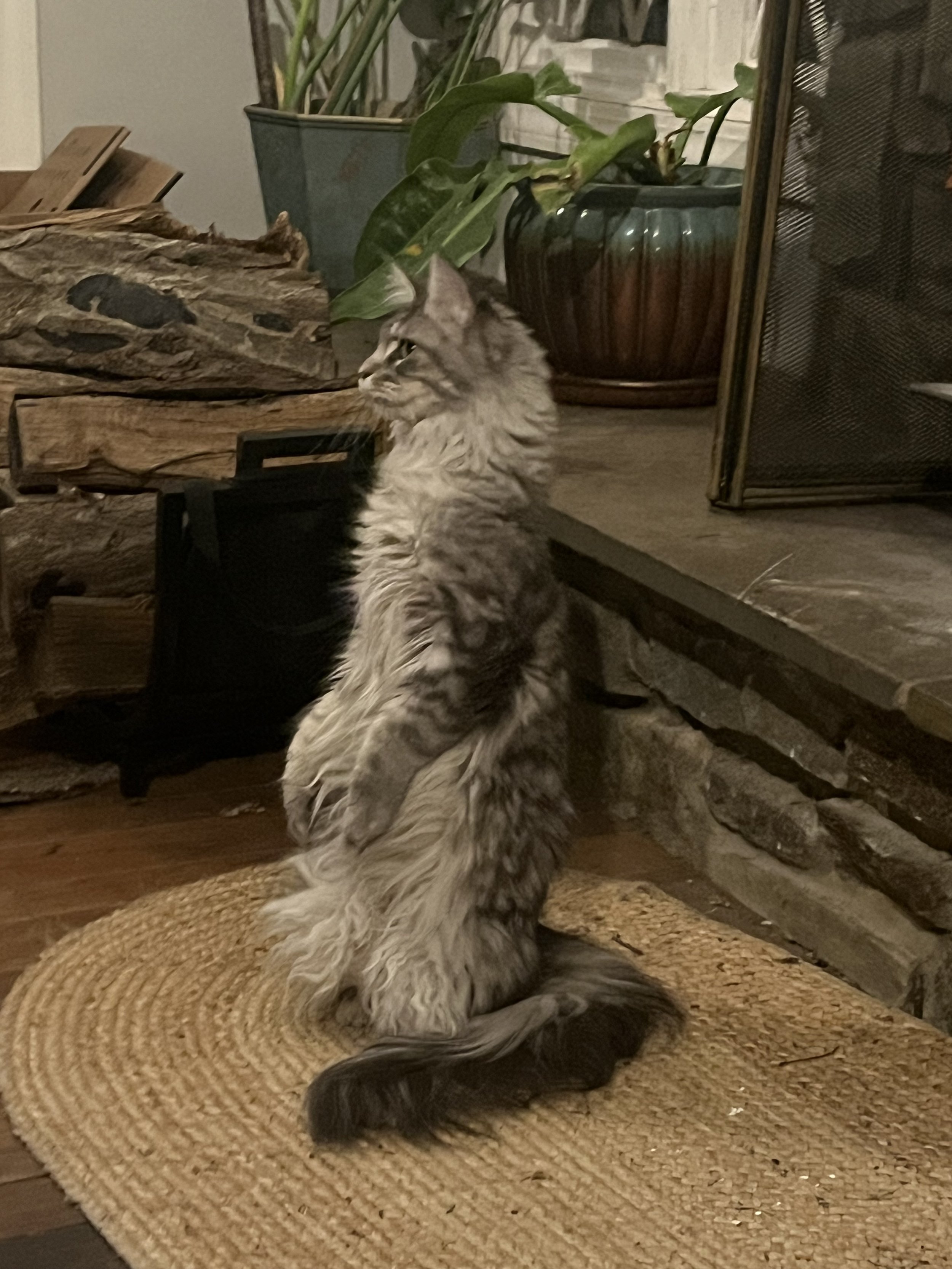
Chloe is a Blue Mackerel Tabby
3. Spotted Tabby
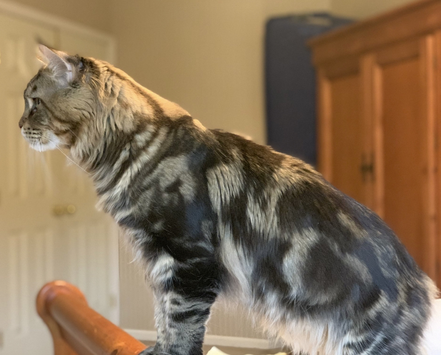
The spotted tabby looks exactly how it sounds — covered in spots instead of stripes.
· Distinct oval or round spots along the sides
· Spots may be large or small
· Often looks like broken mackerel striping
· Spots may be evenly spaced or more random
4. Ticked Tabby
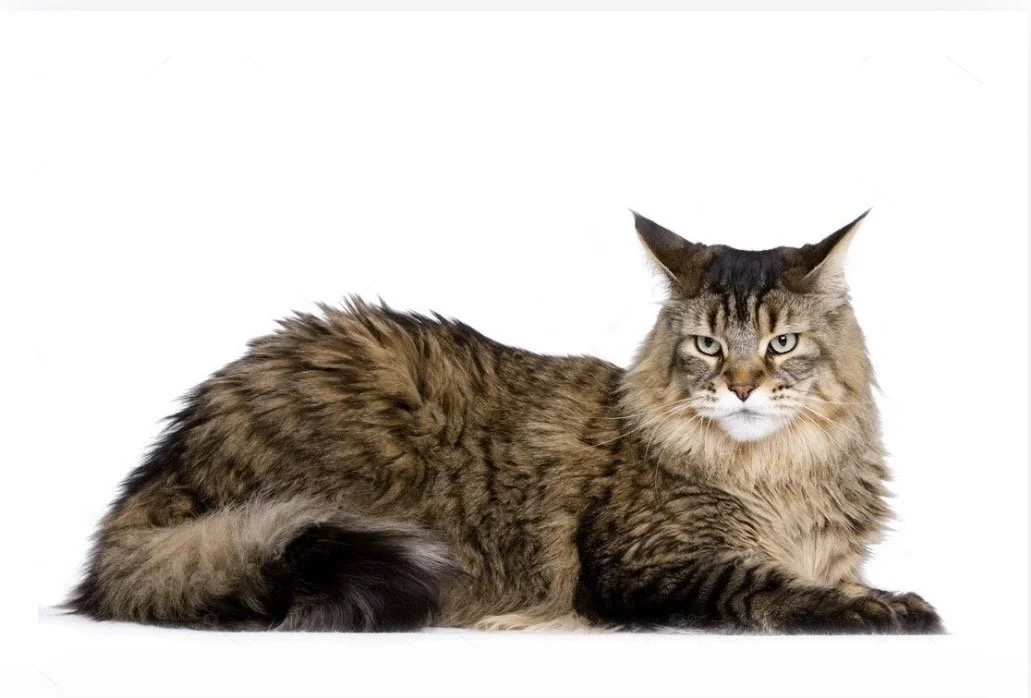
Ticked tabbies are the most subtle and often the hardest to identify.
· No obvious body striping
· Each hair has alternating light and dark bands
· May have faint leg or tail barring
· Face still shows the classic tabby “M”
All that to say, “tabby” isn’t a color — it’s a pattern. Within that pattern family, there’s a lot more variety than a lot of people realize. As kittens grow and their coats develop, patterns become more defined and easier to identify.
It’s fun to understand the differences, but it’s only really important to understand if you intend to show your cat. Even then, many people who show cats get corrected in the ring on their cat’s markings. It can be challenging to discern the difference between classic and mackerel tabbies- I saw two judges at a cat show arguing over whether a cat was classic or mackerel tabby so it can be difficult even for the pros.
At the end of the day, our cats don’t really care if you call them classic tabby or spotted tabby- just don’t call them late for dinner! (Sorry, I couldn’t resist.)
